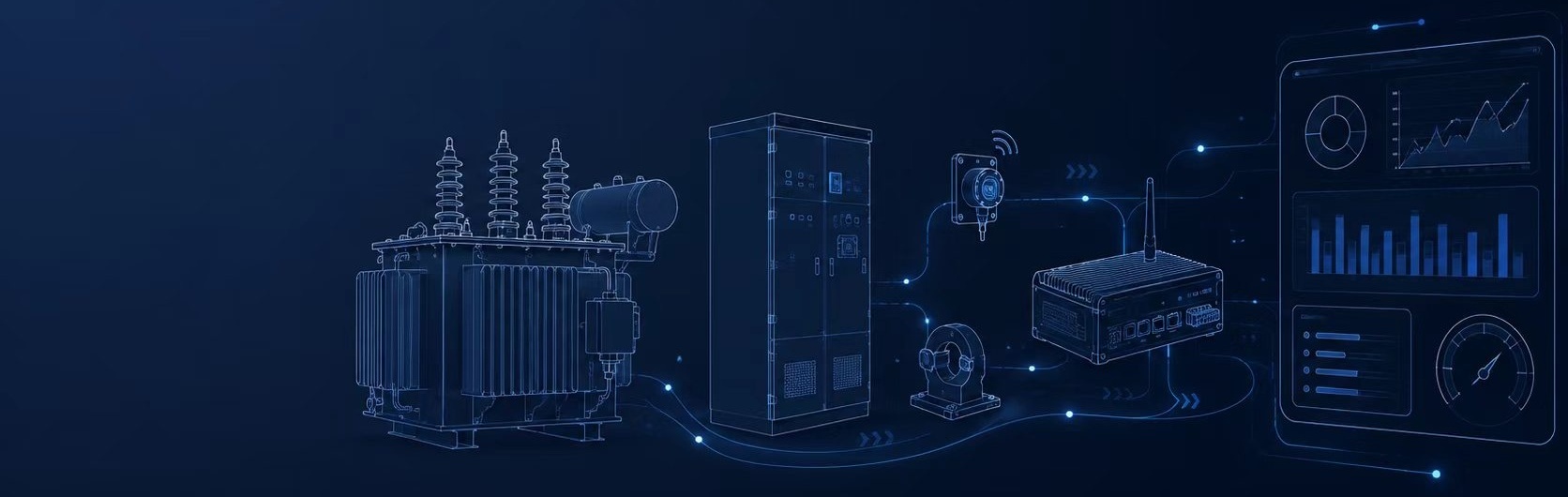
When a facility runs multiple power assets, reactive maintenance does not scale — the gap between what your team knows and what is actually happening in the field grows with every asset you add.

Facilities managing a fleet of power assets — industrial parks, manufacturing campuses, logistics hubs, port operators — face a coordination problem that single-asset maintenance approaches cannot solve. Fault information is fragmented across systems, paper records or not captured at all. Maintenance scheduling runs by calendar rather than by what each asset's condition actually warrants. When a component needs replacing on a transformer that has never been monitored, the procurement process adds days or weeks to an outage window that was never planned. The problem compounds with scale: the more assets in the fleet, the wider the gap between what the maintenance process assumes and what is actually happening across the site.

The starting point is unified visibility — a single monitoring platform receiving condition data from every asset in the fleet, whether they are in the same building or distributed across a site. When any asset's parameters shift outside normal range, the platform flags it centrally rather than waiting for a routine inspection to discover it.
Monitoring extends across three layers: continuous sensors provide internal parameter data for each asset; infrared thermal imaging covers surface temperature distribution and connection quality across the full distribution area; and visual inspection through edge-connected cameras tracks physical condition — oil seepage, surface degradation, blocked cooling paths and safety events in distribution rooms. No single layer replaces the others; together they provide a level of coverage that isolated inspection rounds and fixed-point sensors cannot match individually.
When the platform identifies a developing condition — from any data layer — it connects to supply. The relevant component is pre-matched in the spare parts catalogue and your procurement team has a quote request ready before the maintenance window opens. Asset management and MRO supply become one coordinated solution: the platform does not just identify what needs attention, it helps you act on it without starting a separate procurement process from scratch.
Monitoring System"Your assets run continuously. Your asset management system should too."

Components selected for a specific role in this scenario — not a full catalogue listing.
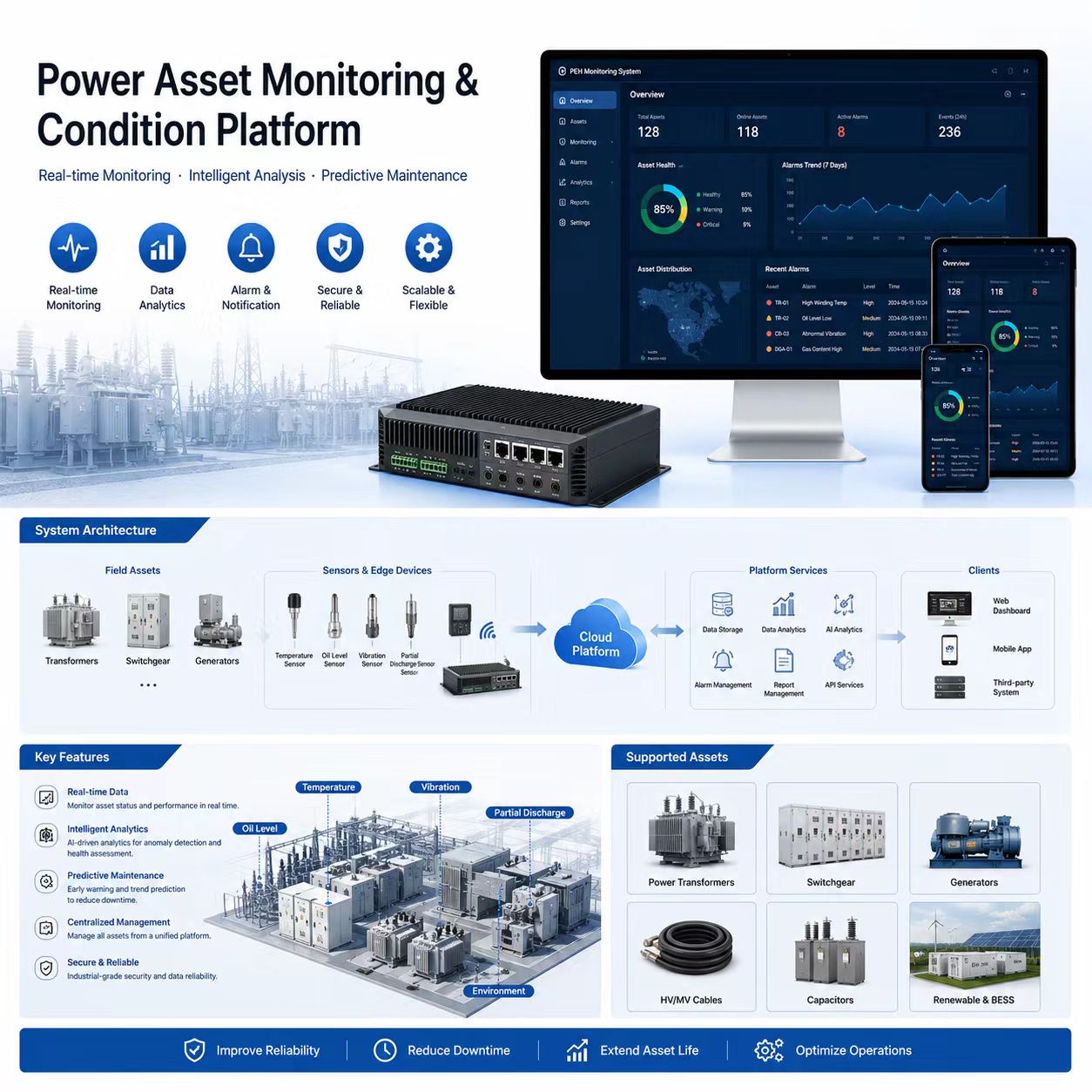
Unified dashboard for the full asset fleet — condition data, inspection results and supply actions in one interface across all locations.
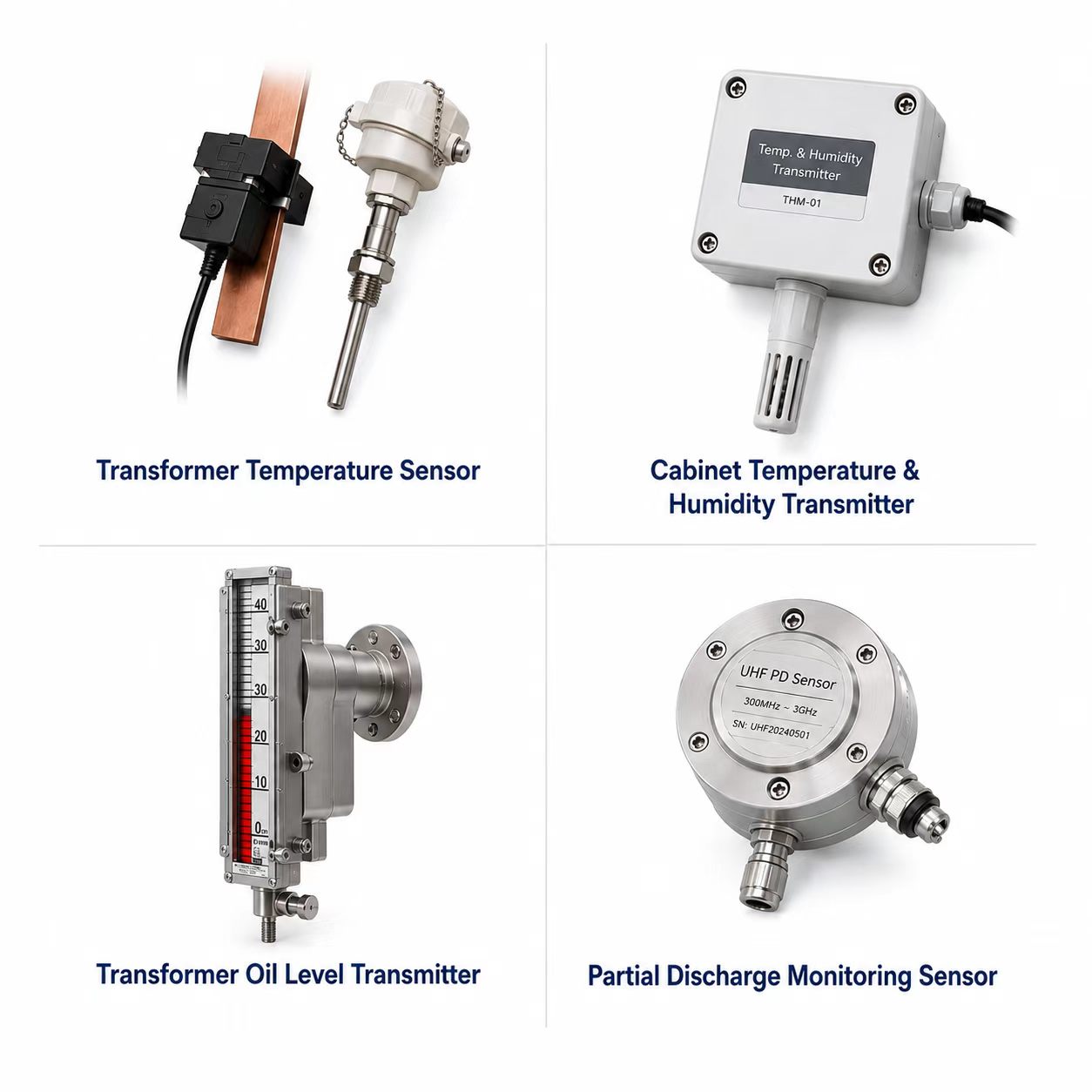
Deployable field sensors across the fleet — temperature, electrical condition and oil state continuously tracked per asset, feeding the central platform.
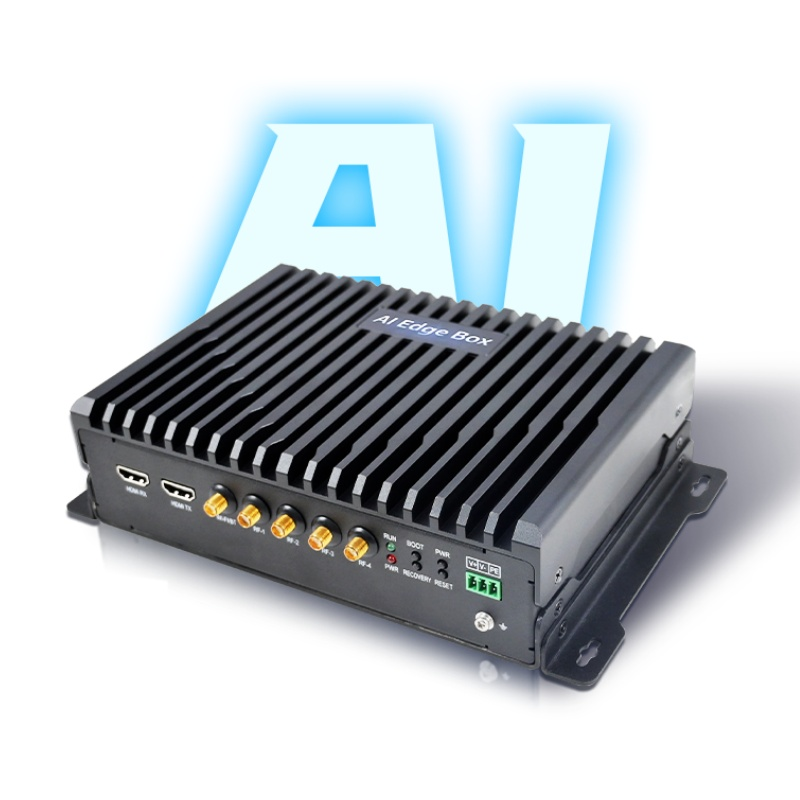
Local processing at each asset location — alarms and condition data managed at the edge, connected to the central platform regardless of site network conditions.
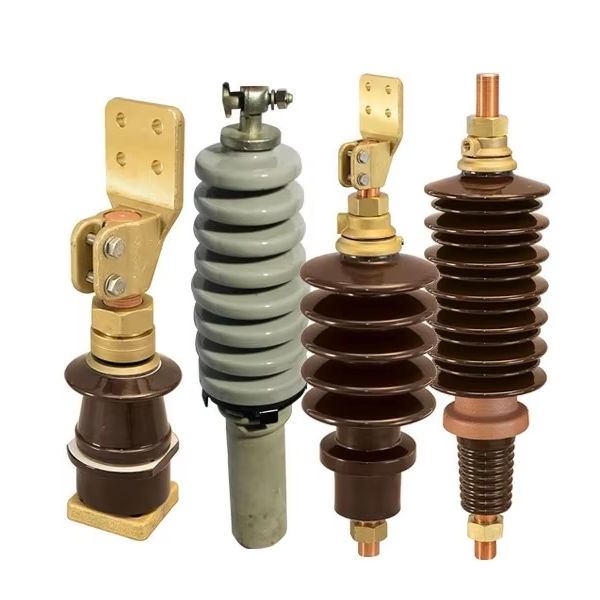
High-wear item frequently identified through visual and thermal inspection — cross-reference support for mixed-fleet procurement.

Most relevant for facilities and operators managing five or more distribution transformers where reactive maintenance has become operationally unsustainable, or where a single equipment failure creates disproportionate operational impact across the site. We scope the monitoring architecture against your asset register and configure supply agreements around your maintenance cycle — the programme typically starts with the highest-criticality assets and extends to the full fleet as the approach is validated. Contact us with your asset count, voltage class and current maintenance structure to start the conversation.

Further reading on the engineering behind this scenario — practical context, no sales pitch.

Architecture for temperature, PD, DGA and moisture monitoring — sensors, edge gateways and what to measure first.
Read article →
Honest cost comparison, organizational readiness requirements and a practical framework for when monitoring beats scheduled maintenance.
Read article →
Insulation aging, cooling faults, tap changers, through-fault damage and moisture — which are detectable, and what monitoring actually prevents.
Read article →